
Understand
Learn what a system is designed to do before interpreting a symptom or test result.
Automotive technology & diagnostics
Build practical diagnostic thinking across automotive electronics, EFI systems, scan tools, CAN networks, and oscilloscope testing— connected to real workshop experience.
HPR Academy
HPR Academy connects technical understanding with a disciplined test process. The goal is not to replace parts from guesses—it is to understand the system, measure the evidence, and verify the fix.
Learn what a system is designed to do before interpreting a symptom or test result.
Use scan data, meters, oscilloscopes, and circuit tests to collect reliable evidence.
Confirm the fault, validate the repair, and build a repeatable diagnostic process.
Three-month Fundamentals course
Five connected learning areas take students from electrical understanding to evidence-based vehicle diagnosis.
Build the circuit knowledge needed to test power, ground, components, sensors, and control-unit inputs and outputs.
Understand fuel-injection architecture, sensor feedback, actuator control, and evidence-based fault diagnosis.
Use scan data as evidence—moving beyond fault-code reading into guided tests, live data, and verification.
Learn vehicle-network fundamentals, communication architecture, and a structured approach to network faults.
Capture and interpret automotive signals so electrical and electronic faults can be proven instead of guessed.
Practical learning environment
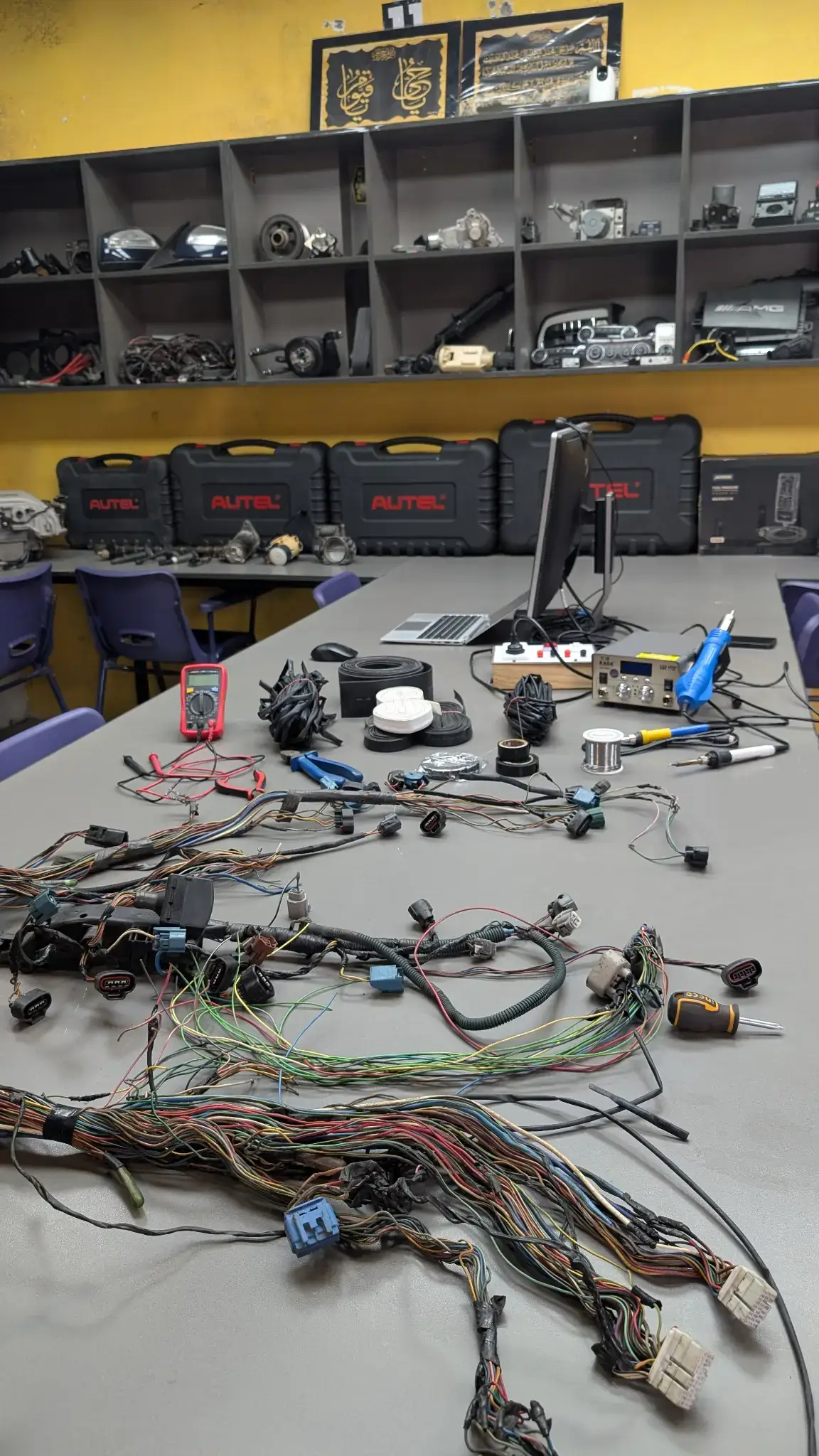
Structured classroom work builds the theory. Bench testing, wiring, ECUs, scanners, and measurement tools then turn that theory into a usable diagnostic process.
Technology platform
Equipment and workflows are presented as technical capability, not as a claim that every specialist platform is included in one three-month course.
Autel MaxiSys Ultra S2 workflows for modern vehicle diagnostics, measurement, and guided testing.
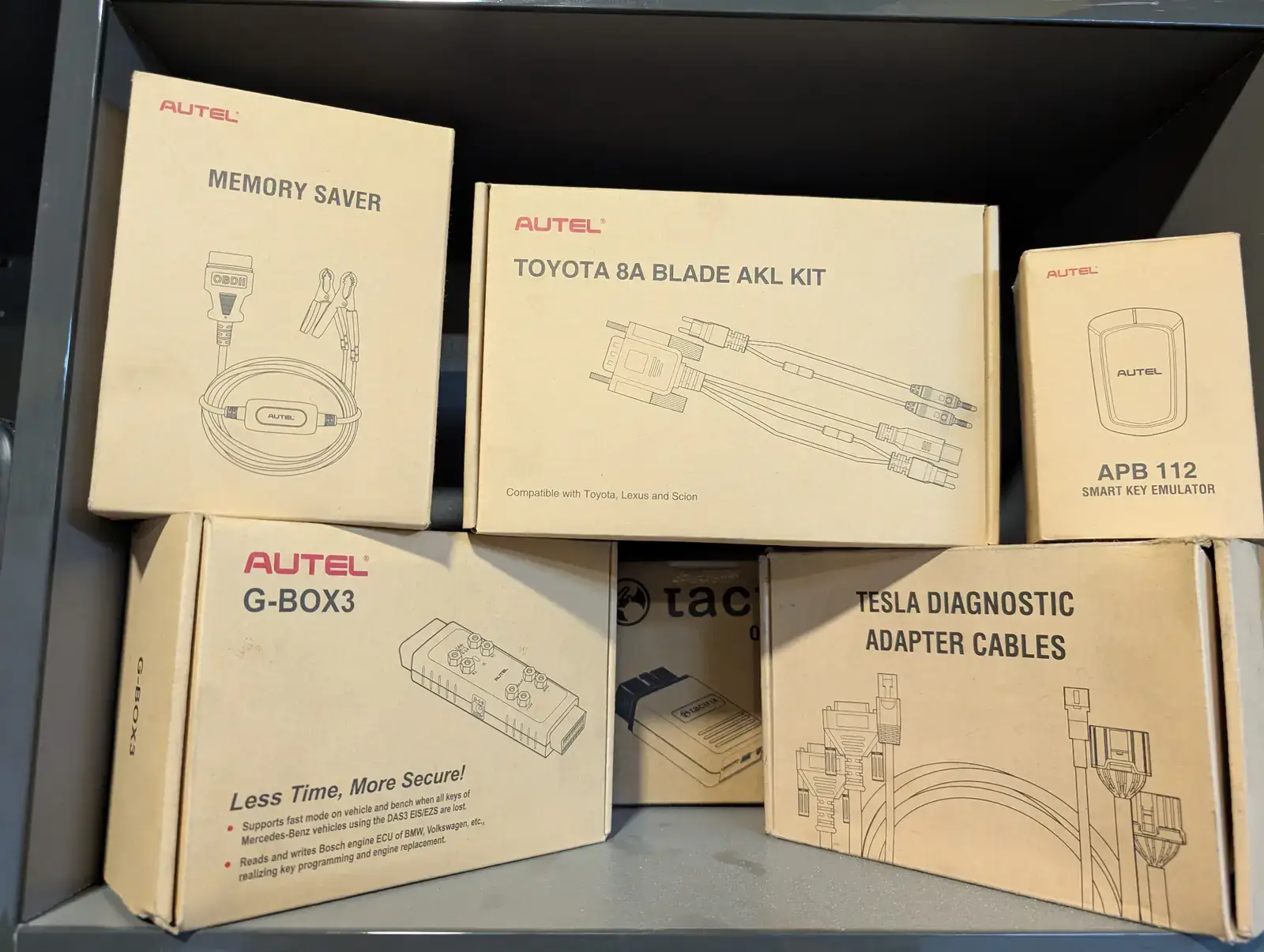
Autel MaxiIM IM608 Pro II with XP400 Pro, G-Box3, emulators, adapters, and supporting accessories.
PCMFlash software workflows with suitable interfaces, controlled bench connections, and ECU hardware.
AUTOOL PT635 fuel-pressure testing with the relevant gauge, hose, fittings, and adapters.
Mercedes-Benz C4/C6, BMW ISTA, Audi ODIS, JLR systems, and Porsche PIWIS workflows.
Electrical testing, waveform analysis, vehicle networks, and structured fault isolation.
HPR Workshop capability
HPR Workshop provides the broader professional environment behind the Academy. These workshop capabilities are distinct from the approved scope of the Fundamentals course.
Lift-based inspection, precision repair, engine and transmission work, and manufacturer-specific timing tools.
Dry-dent and paintless-dent workflows, body preparation, professional paint-booth processes, and refinishing.
Automotive fabrication, welding equipment, custom workstations, and supporting workshop tooling.
Vehicle-network diagnosis
The animated trace illustrates a high-speed CAN network. In a recessive state, CAN-H and CAN-L are nominally near 2.5 V. During a dominant state, CAN-H rises toward 3.5 V while CAN-L falls toward 1.5 V.
Educational simulation only—not live vehicle telemetry or a measurement from a specific HPR vehicle.
Current admissions
Available courses and batches are loaded from HPR Academy's current admissions system in the application form below.
Official online application
Complete each section carefully. A submission creates an application record; admission remains subject to review and seat confirmation.
Visit HPR Academy
Open the live map for the current route and directions to HPR Academy.
HPR Academy Tap for live directions